
TMJ Treatment Sachse
Say Goodbye to Persistent Jaw Pain

Do you often struggle with jaw pain, difficulty chewing, and related symptoms? It is possible that you have TMJ disorder (TMD). This condition can have a significant impact on your quality of life! The good news is that our Sachse team is ready to help you find lasting relief via conservative and effective TMJ treatment. Continue reading below to learn more, or contact us directly to set up a consultation.
Why Choose Sachse Family Dentistry for TMJ Treatment?
- Dentist with Advanced Training in TMJ Treatment & BOTOX
- Highly Skilled & Compassionate Dental Team
- Multiple Convenient Payment Options
What Is TMJ Disorder?
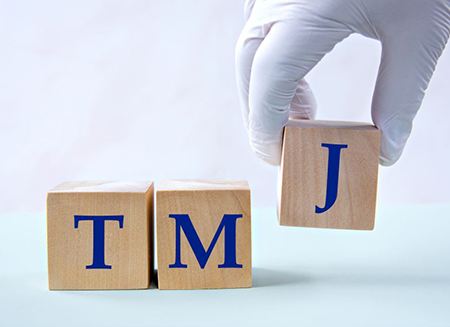
Your temporomandibular joints (TMJs) are located just in front of your ears. Their job is to connect your mandible (lower jaw) to your skull, and they play a major role in chewing and speaking. When these joints suffer damage or inflammation, it can lead to a broad range of uncomfortable symptoms.
Anyone can develop TMD, and it can be caused by many factors, such as teeth grinding, stress, a misaligned bite, and more.
Symptoms of TMJ Disorder

TMD is associated with dozens of different symptoms. Some of the most common include:
- Tenderness, pain, and soreness in the jaw
- Difficulty chewing
- Limited jaw mobility or the sensation of lockjaw
- Popping and clicking sensations that occur with jaw movement
- Headaches
- Migraines
- Pain in the neck, back, and shoulders
- Changes in bite
- Teeth grinding
- Poor posture
Types of TMJ Treatment

In order to determine the best type of TMJ treatment for you, our team will have to evaluate your unique case. After we perform a thorough examination, we can discuss your next steps. Some patients find a measure of relief from home care, which may involve dietary changes, massage, stretches, and more. However, such remedies are often temporary; professional therapy is usually necessary to optimize results. Therefore, we may recommend that you use an occlusal splint or receive BOTOX® injections.
Occlusal Splint
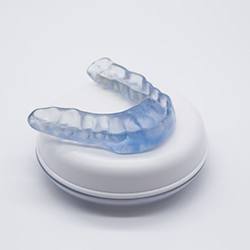
An occlusal splint is a small device that resembles a mouthguard. It places a barrier between the upper and lower teeth in order to prevent teeth grinding. It also slightly repositions the lower jaw in order to relieve strain on the jaw joints. With consistent use, it has the potential to provide long-term TMD relief.
BOTOX® Injections
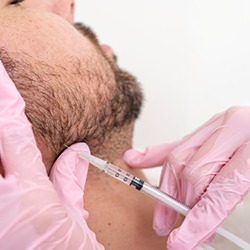
You might think of BOTOX as a purely cosmetic treatment, but it also has some impressive medical applications. When it is injected near the jaw joints, it forces those muscles to relax. In turn, this can reduce stress on the TMJs and result in significant pain relief that lasts for months at a time.